Tiếng Việt
 English
 Español
 Tiếng Việt



Powder quality control is becoming increasingly important as battery materials, metal powders, pharmaceuticals and other powder-based industries expand.
The International Energy Agency reported that global battery demand grew by more than 35% in 2025, exceeding 1.5 TWh. This growth is increasing demand for critical minerals and processed powder materials throughout the supply chain. Meanwhile, ASTM International announced work on a standard for detecting and classifying contamination in additive-manufacturing powder feedstock. These developments reflect a broader industry trend: manufacturers need more consistent methods for evaluating incoming materials and production samples. (IEA, ASTM International)
Particle-size distribution can affect powder flow, mixing, processing stability and final product consistency. However, sieve results may vary when operators use different shaking motions, speeds or test durations.
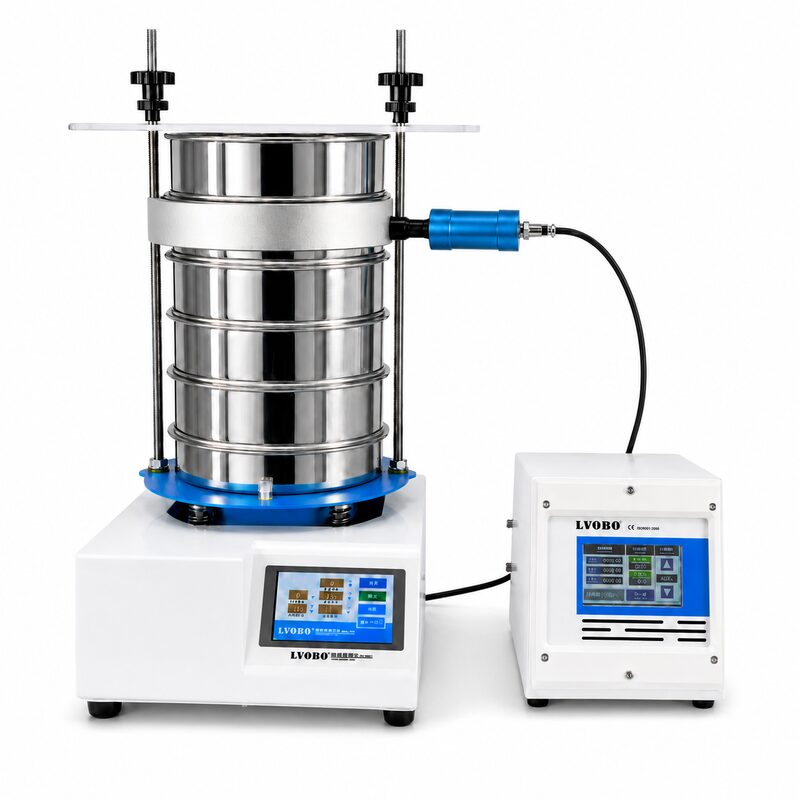
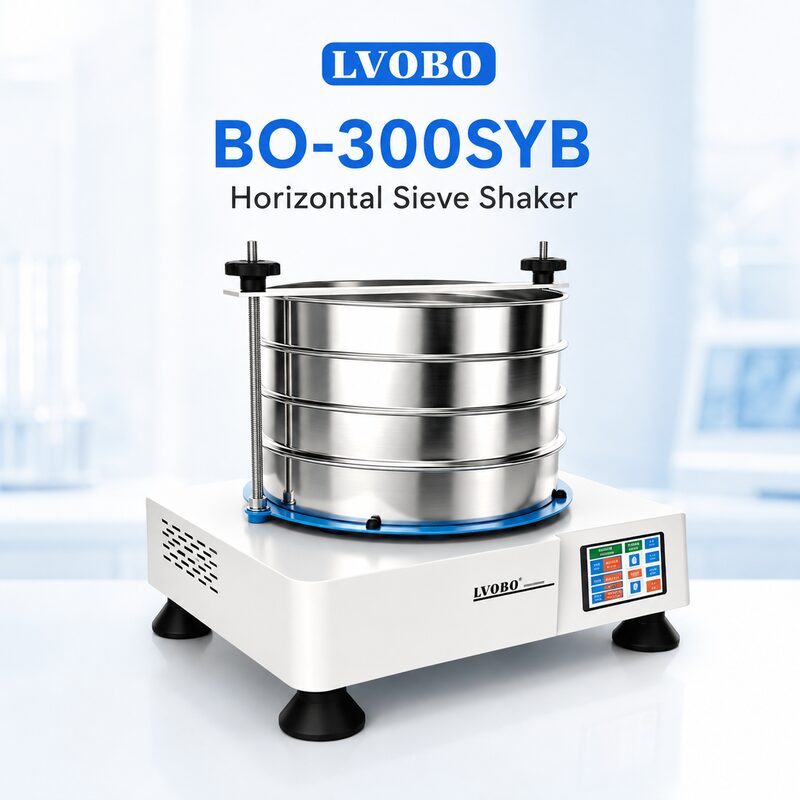
A laboratory rotary sieve shaker helps standardize these conditions. Instead of relying entirely on manual sieving, operators can repeat the same motion and operating parameters for every sample. This makes it easier to compare incoming materials, production batches and retained reference samples.
In September 2025, the FDA and the Center for Research on Complex Generics held a workshop addressing particle-size characterization, method development and validation. Although the workshop focused on laser diffraction and dynamic light scattering rather than mechanical sieving, it highlighted an important principle for every particle-sizing method: results depend on a clearly defined and repeatable procedure. (FDA)
Unlike conventional vibrating screens that generate strong vertical movement, this laboratory sieve shaker uses horizontal rotary motion to simulate the path of manual sieving.
The machine operates with a 50 mm rotating diameter and an adjustable speed range of 30–290 rpm. Its smooth circular motion distributes powder across the sieve surface while minimizing severe vertical vibration.
This movement helps reduce:
Powder bouncing
Localized material accumulation
Screening bias
Excessive dust generation
Uneven distribution across the sieve surface
By allowing the sample to spread, stratify and pass through the sieve more uniformly, the shaker supports consistent measurement of sieve residue and mass-based particle-size fractions.
Different powders may require different movement patterns. The machine therefore allows operators to adjust:
Forward rotation time
Reverse rotation time
Interval pauses
Rotational speed
Total test duration
Up to 21 parameter sets can be stored and recalled. Once a suitable procedure has been established, laboratory personnel can use the same settings for subsequent batches instead of entering every parameter again.
This is especially useful for routine quality control, where multiple samples must be tested under identical conditions. Parameter storage also helps reduce variation between operators and shifts.
The integrated digital timer can be set from 0 to 9999 minutes. When the preset duration is reached, the machine stops automatically.
Operators do not need to stand beside the machine throughout the test, allowing them to perform other laboratory tasks while the sieving cycle runs. Automatic stopping also prevents samples from being processed for different lengths of time because of delayed manual intervention.
For reliable comparisons, laboratories should keep the sample mass, sieve specification, operating speed, movement cycle and test duration consistent.
Frequent cleaning is essential when testing different materials or batches. Residual powder left inside the sieve assembly may affect the next result or introduce cross-contamination.
The snap-fit sieve-frame design allows the assembly to be opened quickly for sieve replacement, inspection and dust cleaning. Its straightforward structure reduces preparation time between tests and makes routine operation easier for new laboratory personnel.
The machine also features stable operation, low noise and a robust structure suitable for repeated laboratory use.
This laboratory rotary sieve shaker is designed for dry-powder sieve analysis and routine quality-control work. Typical testing tasks include:
Comparing particle-size fractions between batches
Measuring material retained on selected sieve apertures
Checking powder fineness
Identifying oversized particles separable by sieve aperture
Evaluating screening efficiency
Supporting incoming-material and production-sample inspection
It can be used in laboratories as well as near production areas where rapid batch checks are required.
Mechanical sieve analysis provides mass-based fractions according to physical sieve apertures. It does not directly measure particle shape, chemical composition or submicron particle distribution.
For highly cohesive ultrafine powders, complex pharmaceutical formulations or tests requiring particle-shape information, sieve analysis may need to be combined with microscopy, laser diffraction or another suitable analytical method.
The rotary sieve shaker does not replace a documented testing procedure or automatically establish regulatory compliance. Its role is to provide controlled, repeatable motion so that sieve-based tests can be performed more consistently.
Recent developments in battery materials, additive manufacturing and pharmaceutical particle characterization show that powder testing is receiving greater attention across industries.
For laboratories that rely on sieve-based analysis, a programmable rotary sieve shaker offers a practical way to reduce manual variation, repeat established test settings and improve everyday testing efficiency. With adjustable rotary motion, 21-program storage, automatic timing and a quick-release sieve frame, it is well suited to routine powder testing and industrial batch quality control.
 3rd Floor, Building 8, Licheng Science and Technology Innovation Center, No. 188 Taixin Street, Licheng District, Quanzhou City, Fujian Province, China
 Điện thoại
: +86 -13788824251
Điện thoại
: +86 -13788824251 E-mail
: lvobo2026@gmail.com,Ivobo2088@gmail.com
E-mail
: lvobo2026@gmail.com,Ivobo2088@gmail.com WhatsApp : +86 -13788824251


Giờ làm việc của chúng tôi
Thứ Hai - Thứ Bảy: 8:00 sáng - 6:00 chiều
 IPv6 MẠNG ĐƯỢC HỖ TRỢ