Tiếng Việt
 English
 Español
 Tiếng Việt



“We used powder from the same batch and did not change the sieves. Why were the three results still different?”
Sales teams often hear this question when discussing laboratory sieve shakers. The machine is usually the first suspect. The customer may wonder whether the vibration is unstable, the speed is incorrect or the running time is too short.
In practice, variation in sieve-analysis results rarely comes from one factor alone. The shaker is only one part of the test.
Material from the same production batch is not necessarily uniform in every part of the container.
Particles can segregate during filling, transport and storage. Larger particles may collect in one area, while fine powder settles elsewhere. Two samples taken from different positions can therefore have different size distributions even though they carry the same batch number.
Before checking the shaker, it is worth checking whether the same sampling and sample-reduction procedure was followed. Otherwise, the sieve shaker may simply be revealing a difference that was already present in the samples.
Fine material can become trapped where the wires cross. This may be difficult to see during a quick visual inspection. Partially blocked openings reduce the amount of material that can pass through the mesh and increase the mass retained above it.
Wear and slight deformation can also affect the effective openings. ASTM E11-24 covers woven-wire sieve cloth, test-sieve construction and opening tolerances, confirming that the sieve is part of the measurement system rather than a simple accessory. ASTM E11-24
Sieves should be inspected before and after use. Cleaning methods should also match the mesh size and material. Aggressive brushing or repeated impact can damage fine wire cloth.
The same running time can produce different sample movement if the speed, sieve-stack height or motion program changes.
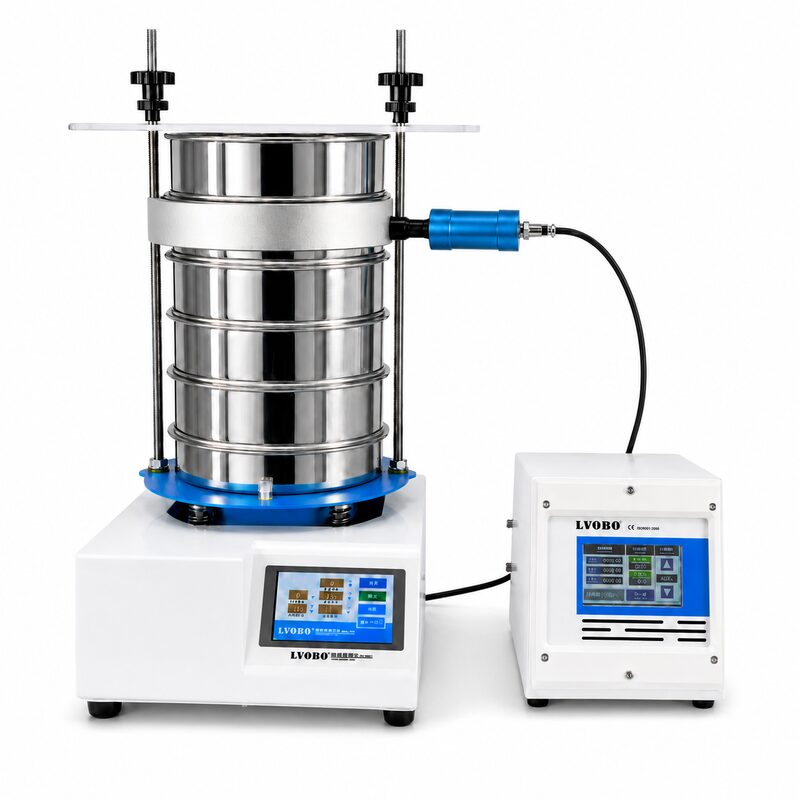
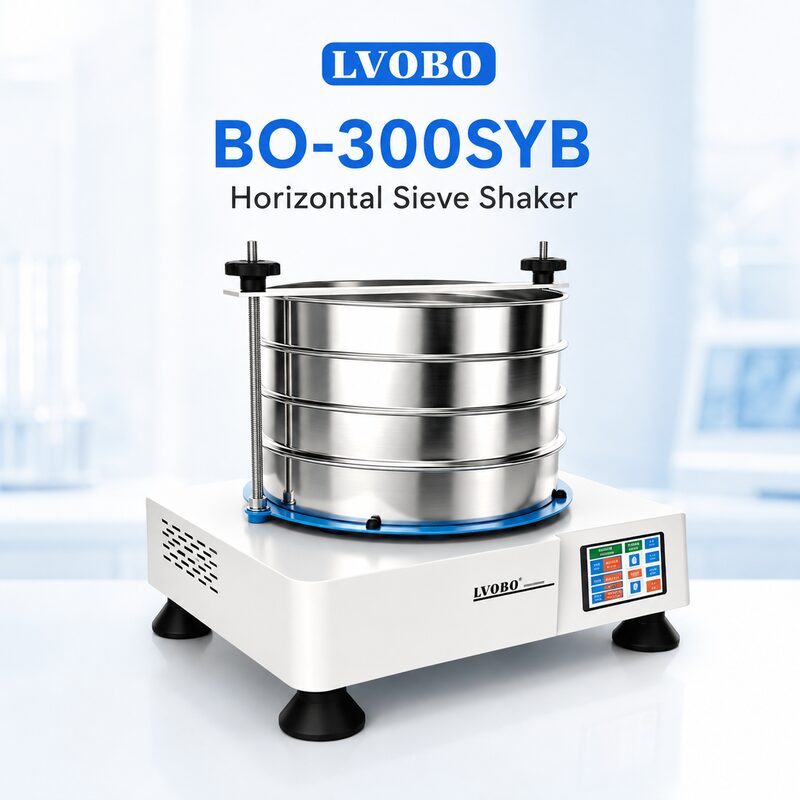
The BO-200SY operates with 200 mm test sieves and accepts configurations of 3–8 sieve layers. Its operating range is 900–1400 rpm, using forward and reverse rotation together with vertical vibration. The timer is programmable, and the controller can store 21 programs.
Stored programs do not make a result automatically correct. Their practical function is to retain an established set of operating conditions. When different operators select the same program, variation caused by manually resetting speed and time can be reduced.
Sample loading, sieve condition and weighing practice still need separate control.
When too much material is placed on a sieve, the sample forms a thick bed. Particles in the upper part of that bed have fewer opportunities to contact the mesh. Extending the running time may not produce the same result as testing a smaller, controlled sample mass.
A very small sample can create a different problem because transfer and weighing losses become a larger percentage of the total.
For this reason, a laboratory procedure should define the sample mass. It should not be decided by how much material appears to fit inside the sieve.
Fine powders affected by moisture, static charge or agglomeration can attach to the mesh or remain as clusters above an opening. In these situations, increasing the speed or extending the running time may not solve the problem.
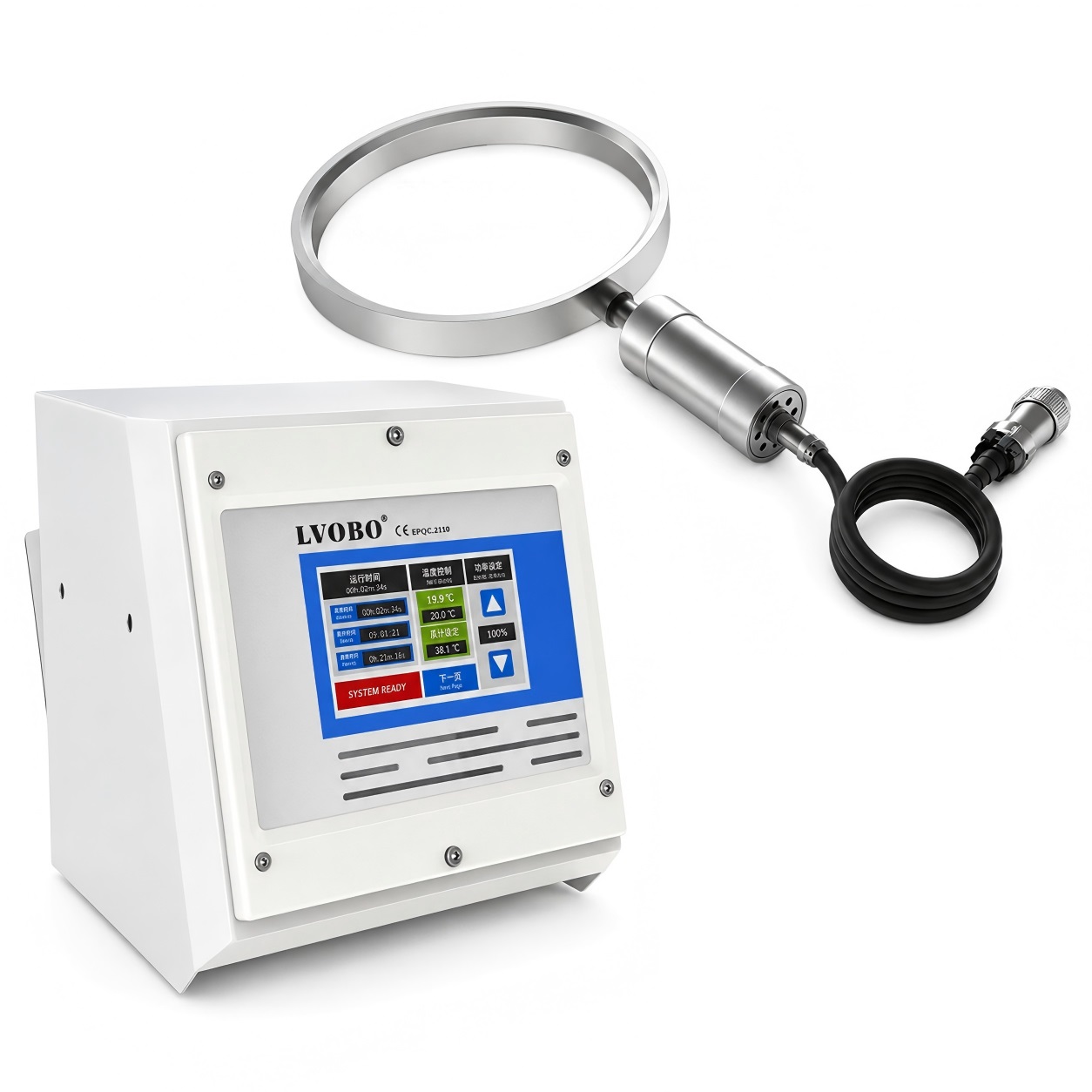
The BO-CSZ200 ultrasonic system is available as an option for fine-powder screening. Whether ultrasonic assistance is appropriate should be determined from the actual behavior of the material. Results from ordinary mechanical sieving and ultrasonic-assisted sieving should not be compared without considering the different test conditions.
As of May 1, 2026, the European Directorate for the Quality of Medicines & HealthCare listed Revision 2 of the Pharmacopoeial Discussion Group’s Analytical Sieving text as ongoing at Stage 2.
This does not mean that the BO-200SY is automatically compliant with a pharmacopoeial or ASTM method. It shows that analytical sieving remains an actively maintained subject and that the complete method—including the sieves, sample, operating conditions and records—continues to matter.
Before concluding that the equipment is malfunctioning, compare the following information from each test:
If these details were not recorded, it can be difficult to determine whether the variation came from the machine, the sieves or the material.
The BO-200SY can control the mechanical motion and retain operating programs. It cannot control every variable in the test. When the same powder gives three different results, the first step is usually not to increase the speed or replace the shaker. It is to place the three test records side by side.
 3rd Floor, Building 8, Licheng Science and Technology Innovation Center, No. 188 Taixin Street, Licheng District, Quanzhou City, Fujian Province, China
 Điện thoại
: +86 -13788824251
Điện thoại
: +86 -13788824251 E-mail
: lvobo2026@gmail.com,Ivobo2088@gmail.com
E-mail
: lvobo2026@gmail.com,Ivobo2088@gmail.com WhatsApp : +86 -13788824251


Giờ làm việc của chúng tôi
Thứ Hai - Thứ Bảy: 8:00 sáng - 6:00 chiều
 IPv6 MẠNG ĐƯỢC HỖ TRỢ